Oasis Smart Home Wall Pad
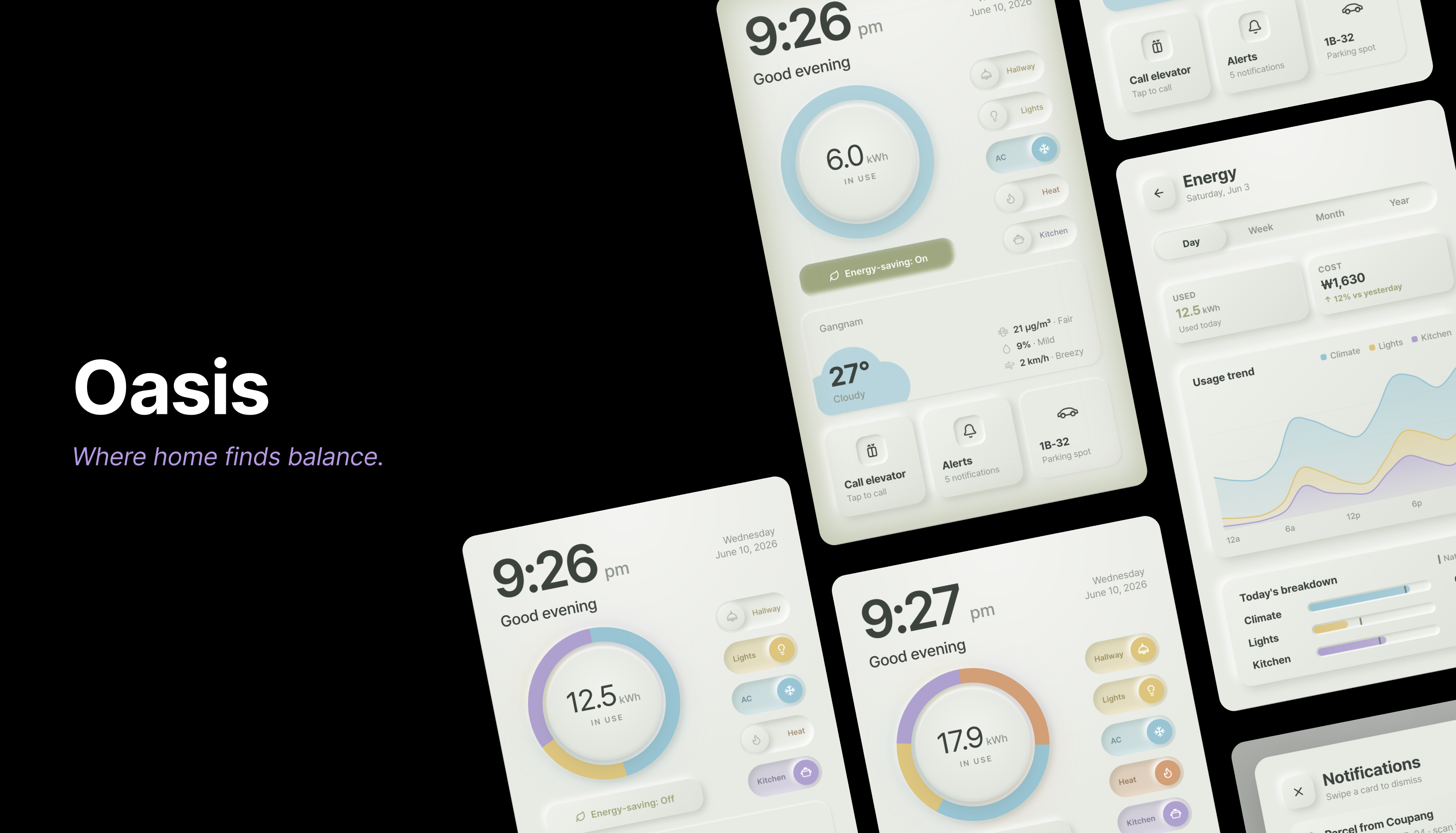
A high-fidelity wall pad prototype that reframes a smart home control panel as a home assistant, making sustainable living feel effortless.
- Role
- Designer, 5-person team
- Context
- KAIST, User Interface Design course — for HS Hwasung
- Timeline
- Exchange semester, 2026
- Tools
- Figma, Claude Design
Overview
For our final project in KAIST's User Interface Design course, my group of five designed a high-fidelity working prototype of a wall pad — a smart home device that controls temperature, lighting, apartment announcements and more — for HS Hwasung's new modern luxury apartment in Gangnam, Seoul.
Problems & design focus
- High cognitive load with no clear prioritization.
- An outdated experience that is not human-centered.
- Poor affordance and unintuitive iconography.
We reimagined the wall pad not as a control panel but as a home assistant. The interface is rooted in sustainable values and centered on a holistic, premium residential experience.
Process
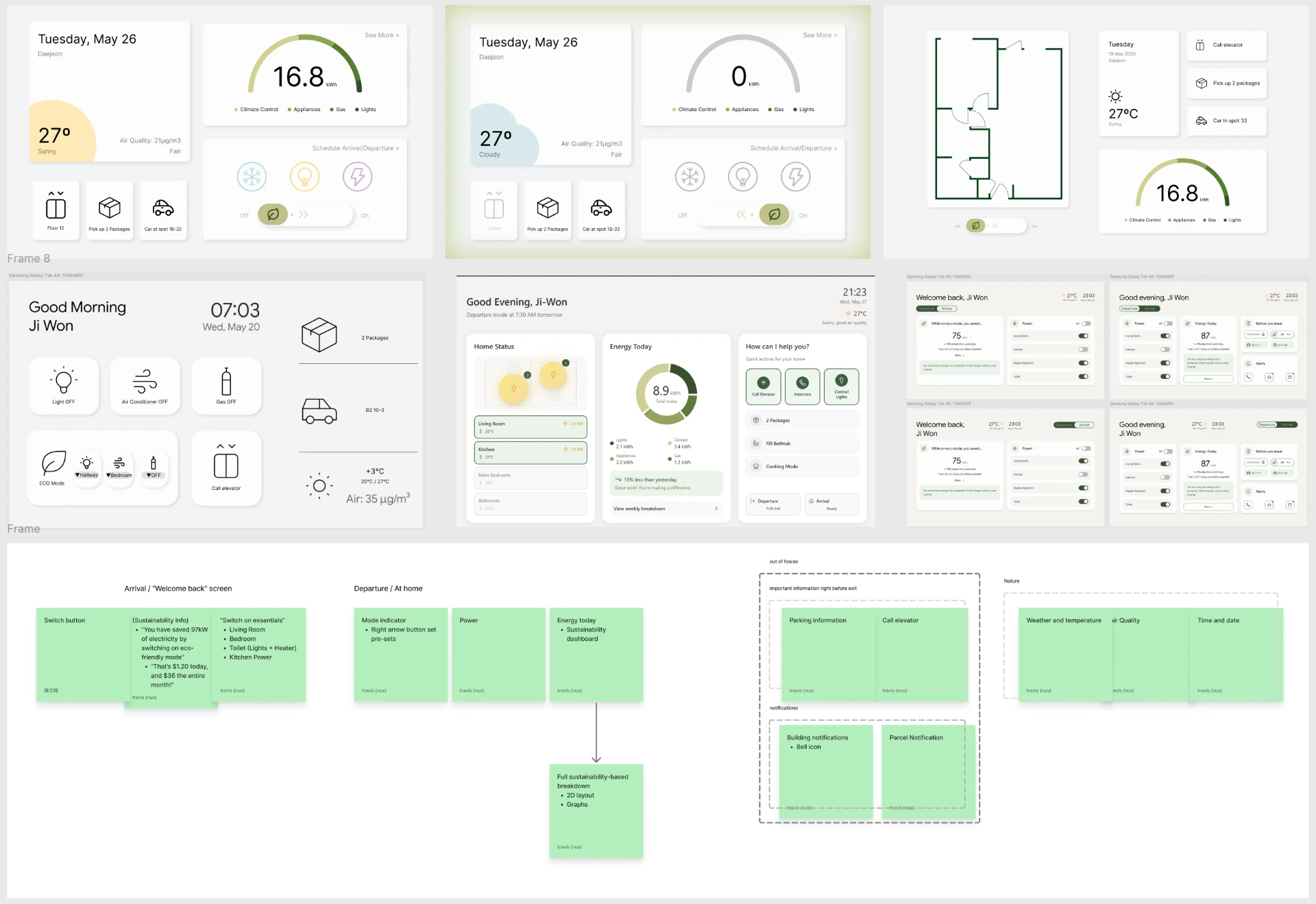
Prompting with our design goals and early specifications helped visualize layout configurations quickly and pinpoint the strengths and weaknesses of our design logic early on. AI can describe what "good" design elements may look like, but it doesn't know what interacting with them feels like — the human creativity, critical evaluation, and refinement were ours.
- Bespoke design: mid-fidelity screens drawn in Figma first.
- AI iteration: after discussion we handpicked the aspects of our designs we liked and asked Claude Design to combine them and propose new ideas.
- Refinement: we refined that output over several weeks to fit our vision and goals.
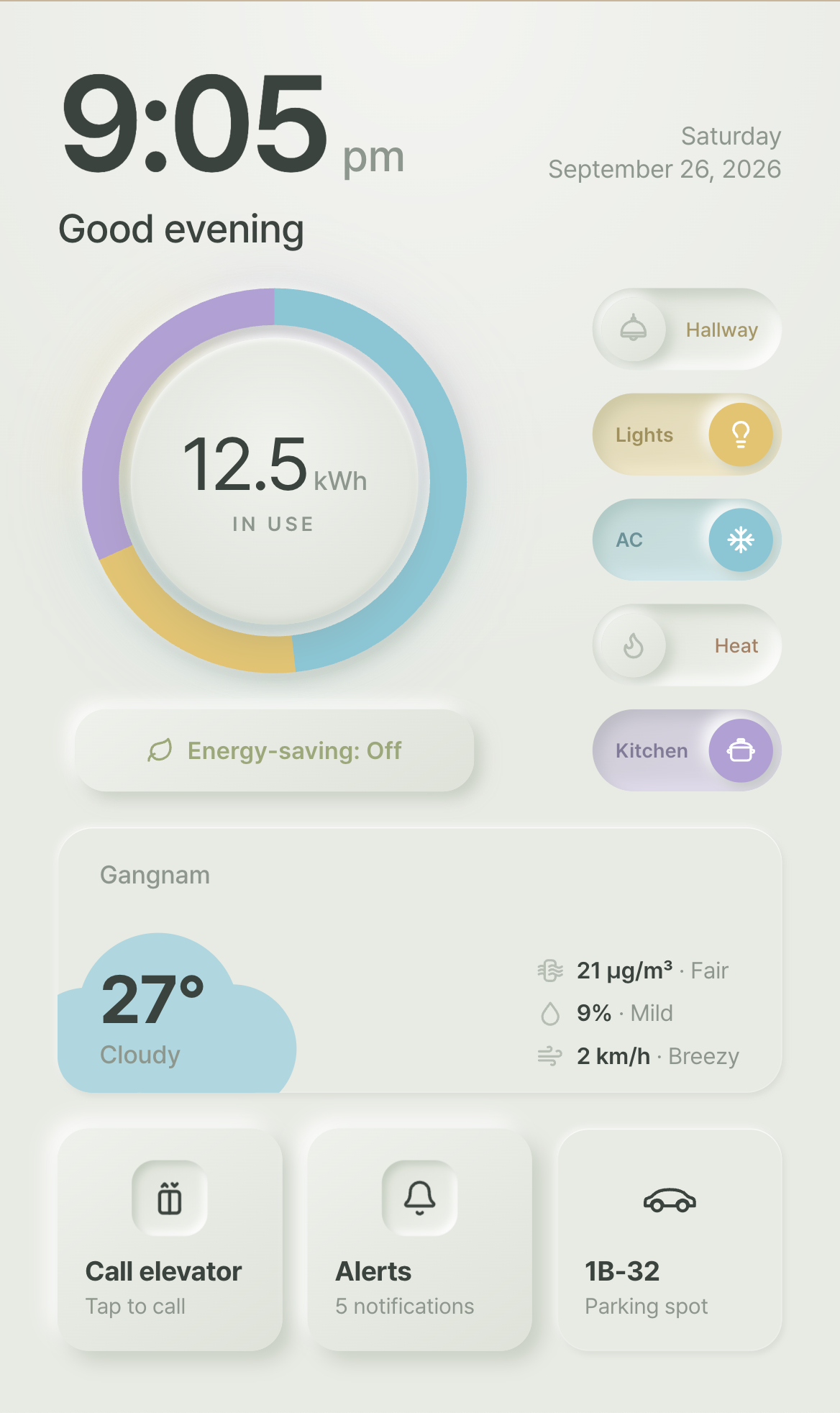
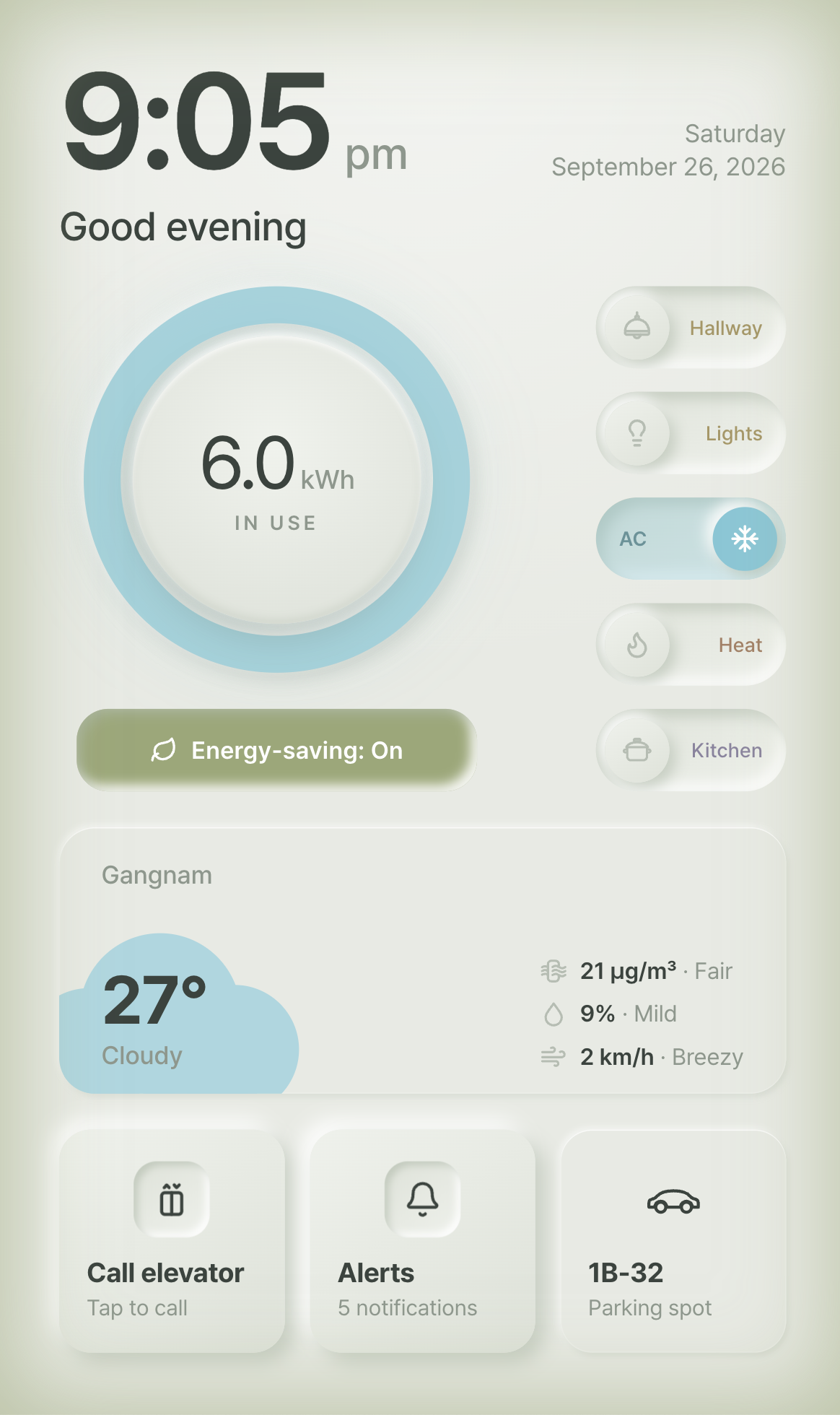
Home page
- Energy usage breakdown visualization: real-time feedback shows which systems draw the most power at a glance.
- Quick controls: lighting, AC, heating, and kitchen power are reachable from the home screen.
- Weather module: informative without overwhelming, supporting the moment before leaving home.
- Holistic apartment journey: elevator calling, alerts, and parking information in one interface.
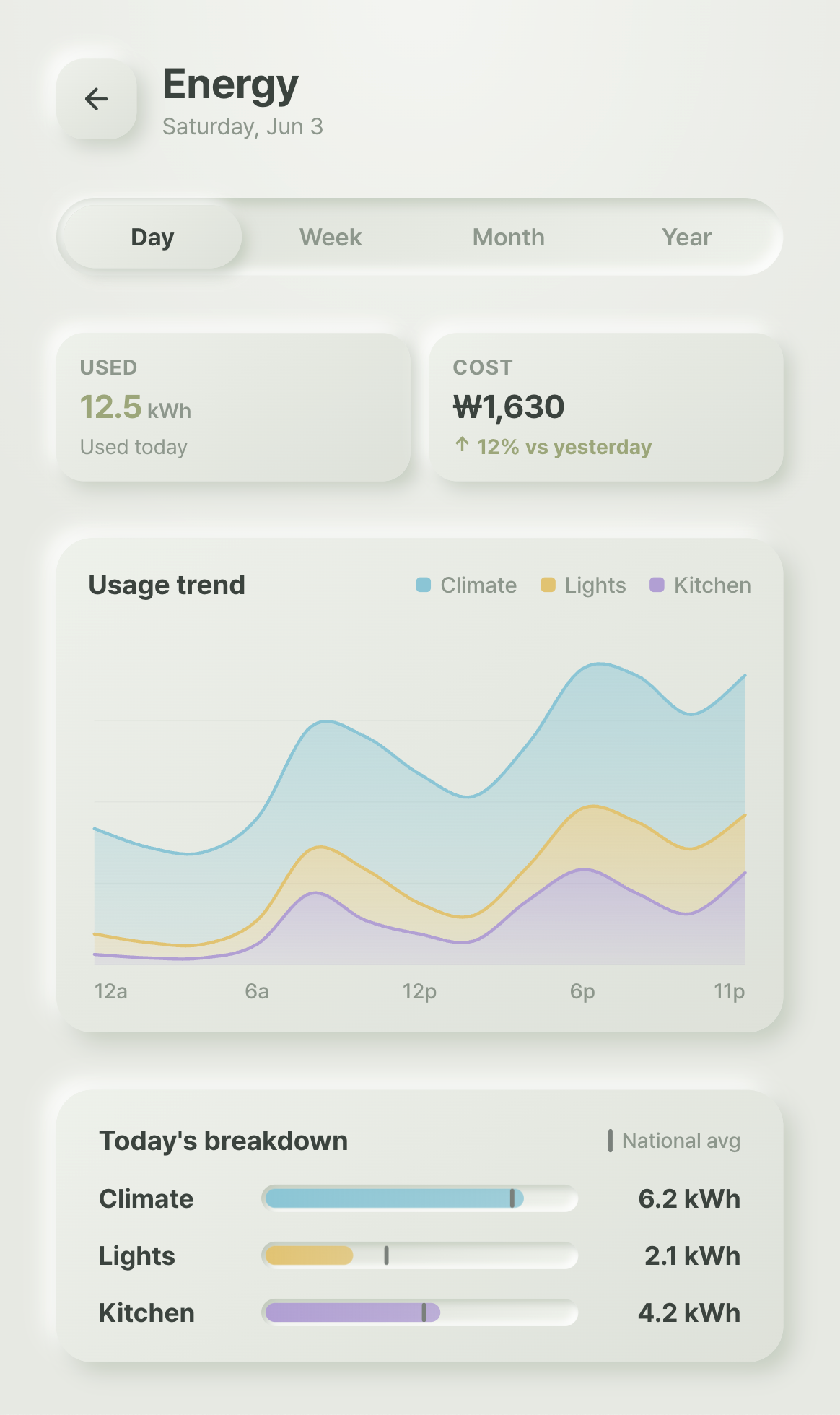
Energy details
- Timeframes: view patterns by day, week, month, or year for long-term trends.
- Contextualized information: cost comparisons and national averages make the data easier to interpret.
- Energy breakdown: category-level usage shows where savings may be possible.
Notification center & energy-saving mode
- Slide to delete notifications — swiping follows familiar mobile patterns, so the wall pad feels intuitive without instructions.
- Icons alongside text improve scannability between alert types.
- Energy-saving mode adjusts settings based on energy use, time, and household conditions.
- A green button with an inner shadow gives a clear state change, making the system feel responsive and trustworthy.
Result
A premium wall pad interface connecting sustainability, convenience, and everyday apartment living. We used a neumorphic visual language so the device reads as warm and pleasant rather than sterile or overly technical, and distinct from market competitors.
Next project
Bloom Buddy →